
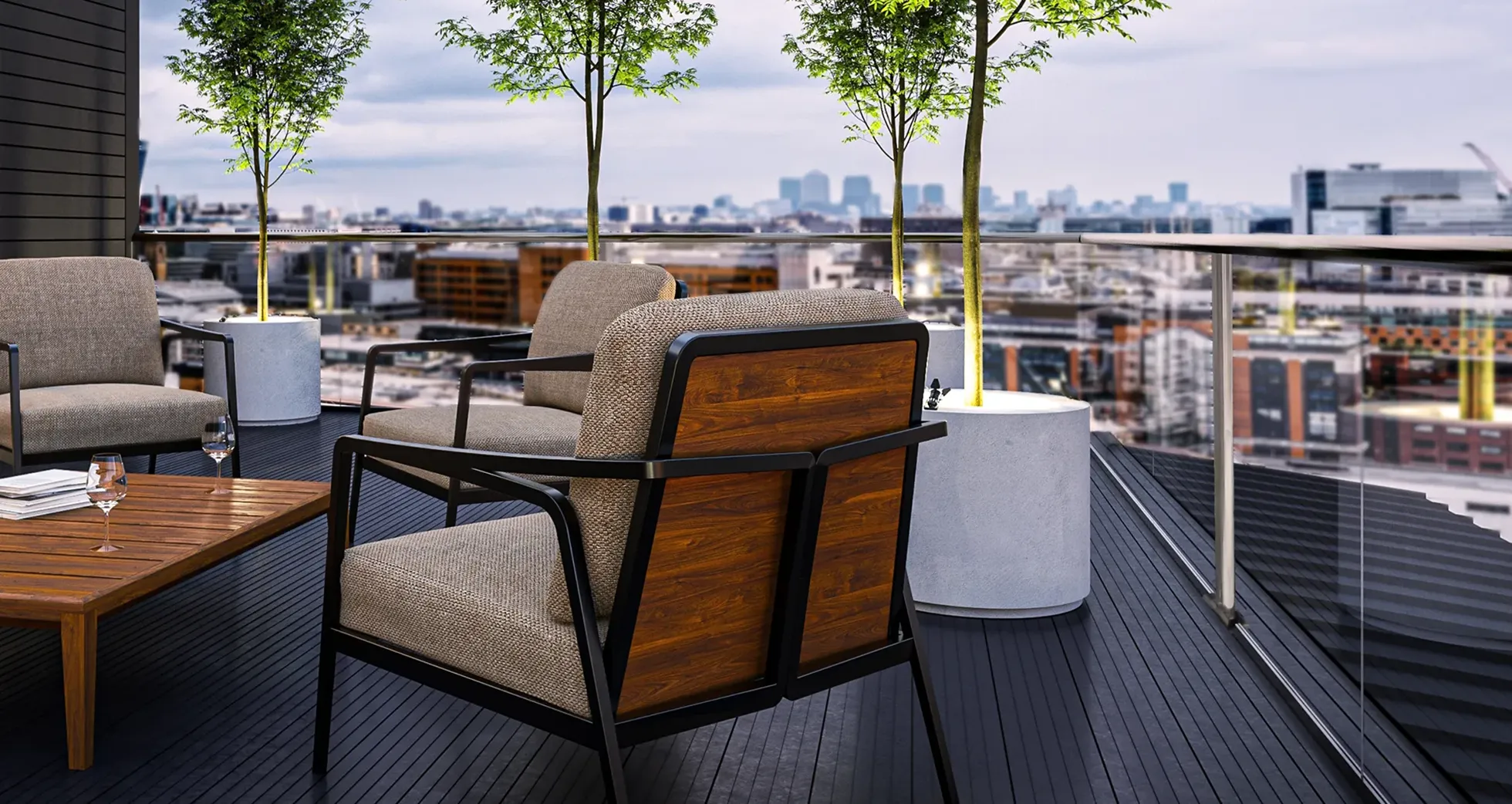
Every metal fixing driven through an insulated roof build-up is a measurable cold bridge. Yet balustrade fixings appear in almost no roof terrace specification, and in almost no TER calculation. As Part L 2021 and the Future Homes Standard tighten fabric performance, that gap starts to show.
★★★★★ 4.9 / 5 Google & Feefo reviews · Made in Surrey
metal conducts heat vs the PIR insulation it passes through
of insulation each steel post bridges, full depth
linear transmittance at a non-penetrative base, for the TER
balustrade fixings are absent from the Accredited Construction Details
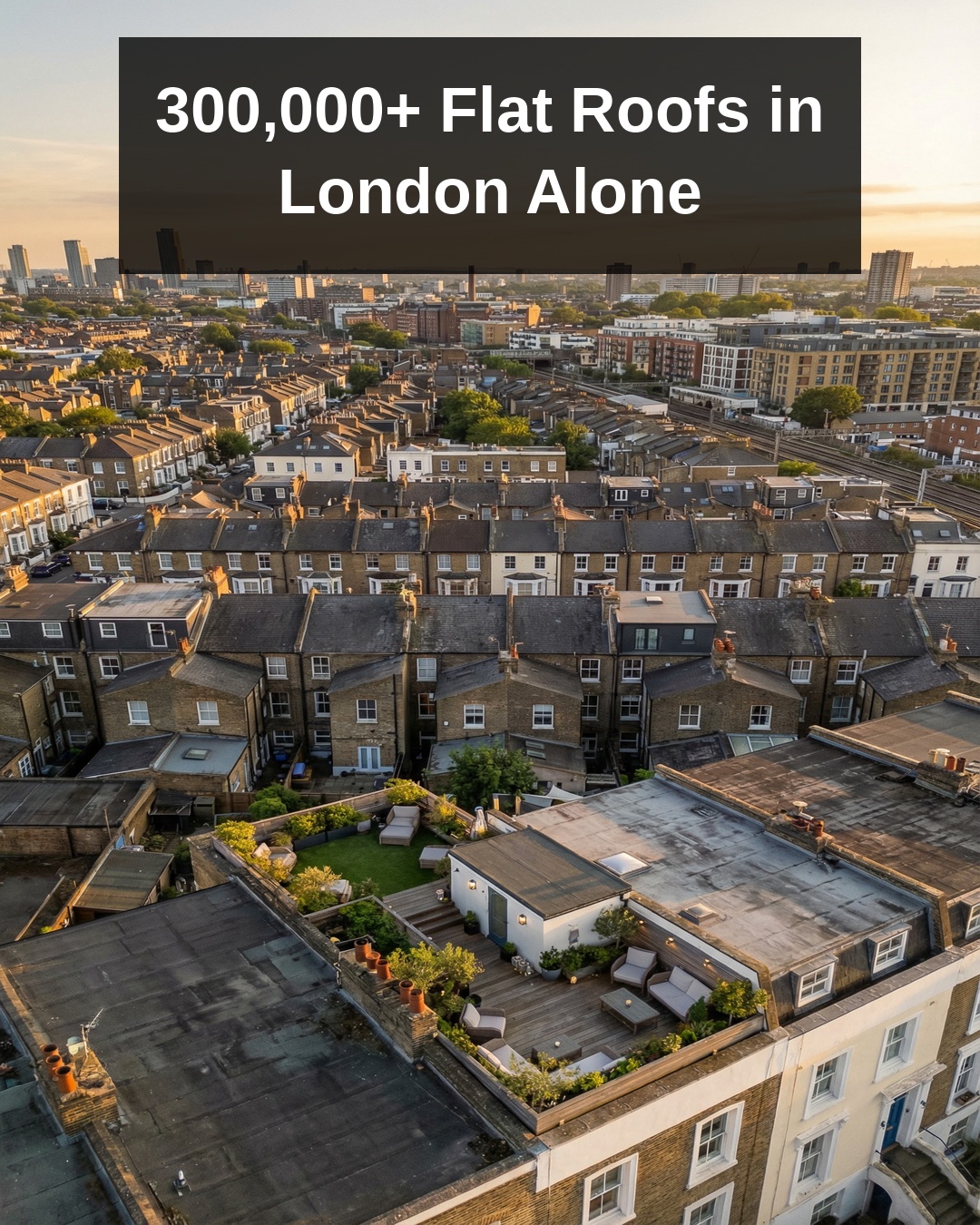
A conventional balustrade fixing is a steel or aluminium baseplate bolted through the roof build-up to the structure. It passes through the full depth of the insulation, typically 100 to 200 mm of PIR.
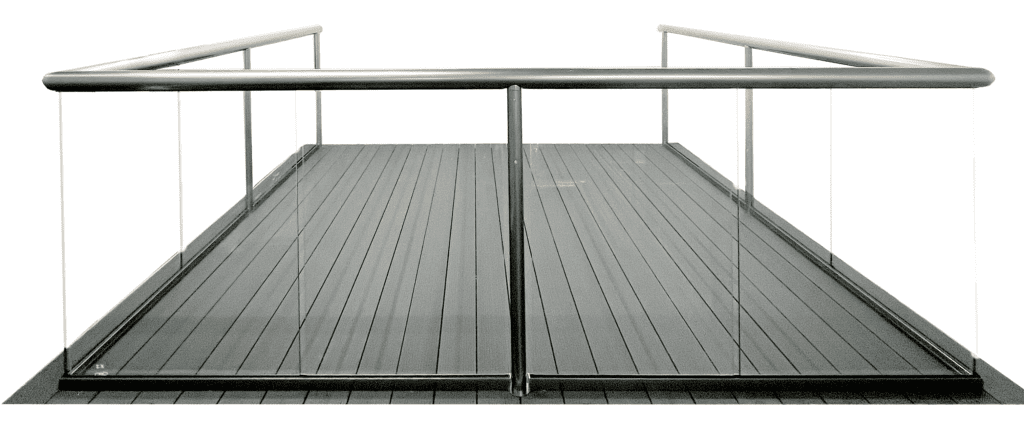
BalcoDeck eliminates this thermal bridge by design. The structural platform sits above the membrane and insulation without penetrating either, so there is no metal path from the exterior fixing to the building fabric.
Raise the balustrade fixing as a thermal bridge element, then send us the roof detail. We will confirm whether a non-penetrative base removes it from your assessment.
| Part L question | Penetrative fixing | BalcoDeck non-penetrative |
|---|---|---|
| Path through the insulation | Metal, full depth, at every post | None |
| Default Psi-value available | No, and usually omitted from the TER | Not required |
| Effect on Target Emission Rate | Understated if the fixing is left out | Effectively nil at the base |
| fRsi surface condensation check | May fall below the threshold at the cold spot | Not triggered at the fixing |
| Continuity of the insulation layer | Broken at each fixing | Left continuous |
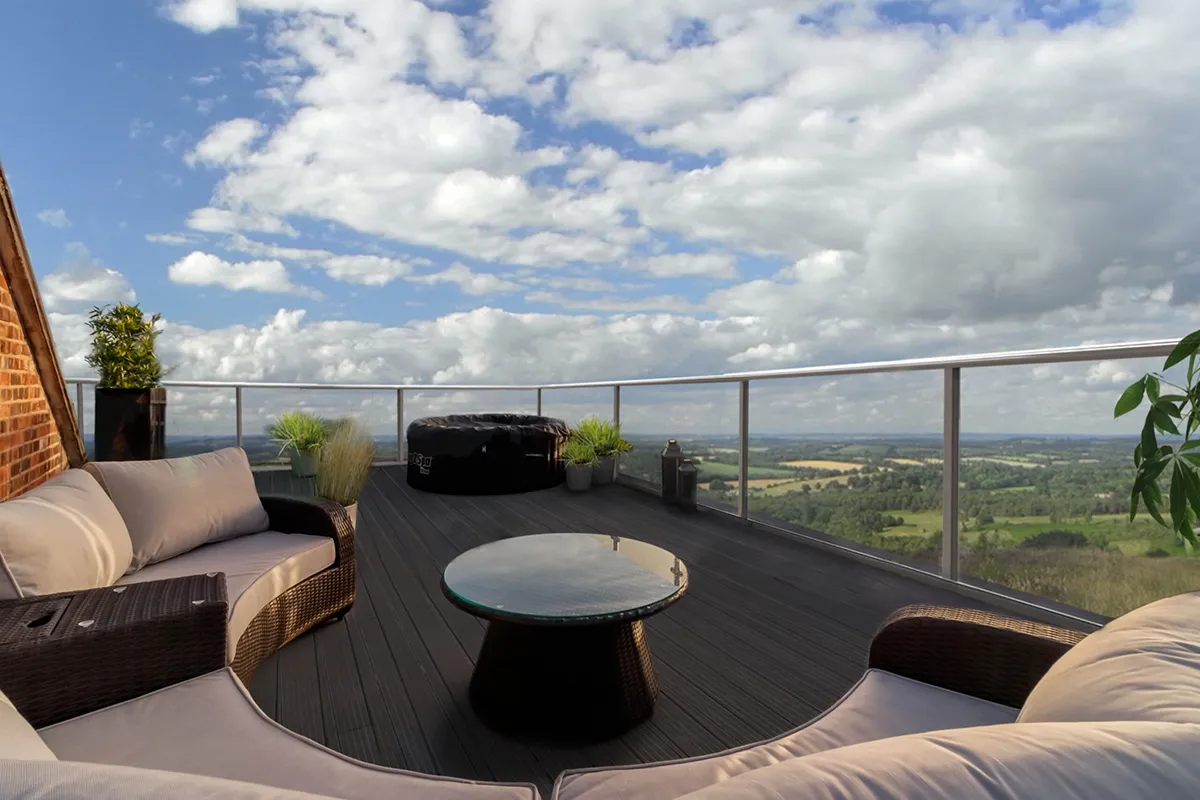
Part L 2021 requires thermal bridges to be modelled in the TER calculation. With no default Psi-value in the Accredited Construction Details for a post through a roof, the correct route is a project-specific value. A non-penetrative base removes the need to calculate one at the balustrade.
The platform sits above the insulation rather than through it, so there is no continuous metal path from the exterior fixing into the building fabric. Without that path there is no linear thermal bridge at the base for the TER.
It can be. A metal fixing creates a local cold spot where the surface temperature factor may fall below the minimum for the humidity class. Condensation at a concealed fixing beneath the deck build-up is not observed until it has caused secondary damage.
Raise the balustrade fixing as a thermal bridge element in the TER conversation, and ask the structural engineer or specialist to confirm whether a project-specific Psi-value has been calculated. If it has not, the calculation may be understating fabric heat loss.
Send us the roof build-up and project stage. Our technical team will tell you honestly whether BalcoDeck removes the fixing from your thermal assessment.
Technical points on this page are drawn from Balconette's own article, The Thermal Bridge Your Detail Drawings Don't Show: Balustrade Fixings and Part L 2021. Standards referenced: Part L 2021, the Future Homes Standard and BS EN ISO 13788. BalcoDeck® is manufactured in Surrey by Balconette. UK Patent GB2636232.
Send us your roof detail and find out whether a non-penetrative base takes the balustrade fixing out of your Part L calculation.