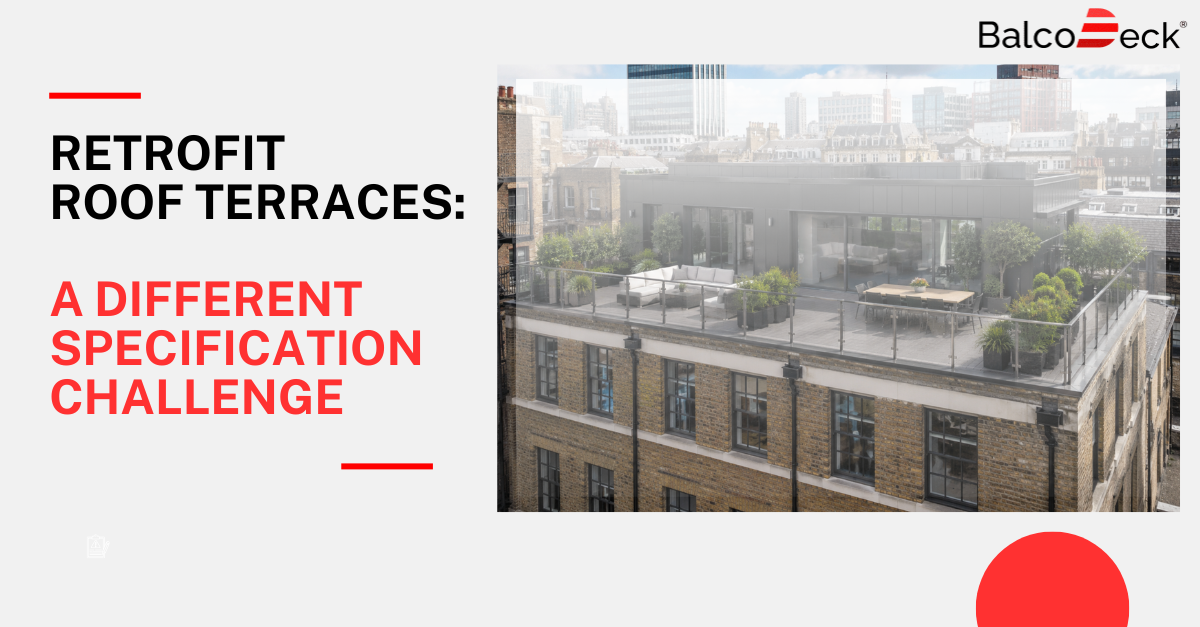
Roof terrace detailing involves a complex interaction between structural requirements and waterproofing performance and many of the most critical decisions sit within the detail. So what are the key questions to ask at design stage?
In practice, design teams are often working with established approaches that are widely accepted across the industry, but not always fully understood in terms of their long-term implications.
This FAQ series has been developed to address those questions directly, starting with one of the most fundamental:
What happens when you drill through a waterproof membrane?

Introducing penetrations through the membrane breaks its continuity and creates a dependency on localised detailing such as sealants, collars and flashing systems. While these can perform effectively when installed correctly, they are subject to movement, environmental exposure and long-term material ageing.
Because the waterproofing layer is typically concealed beneath the terrace build-up, early-stage deterioration may not be visible — meaning issues can develop over time before becoming apparent.
Approaches such as BalcoDeck®, developed by Balconette, aim to address this by enabling structural load transfer without penetrating the waterproofing layer, helping to maintain membrane continuity and reduce long-term risk.
Read the full FAQ article on Balconette here.