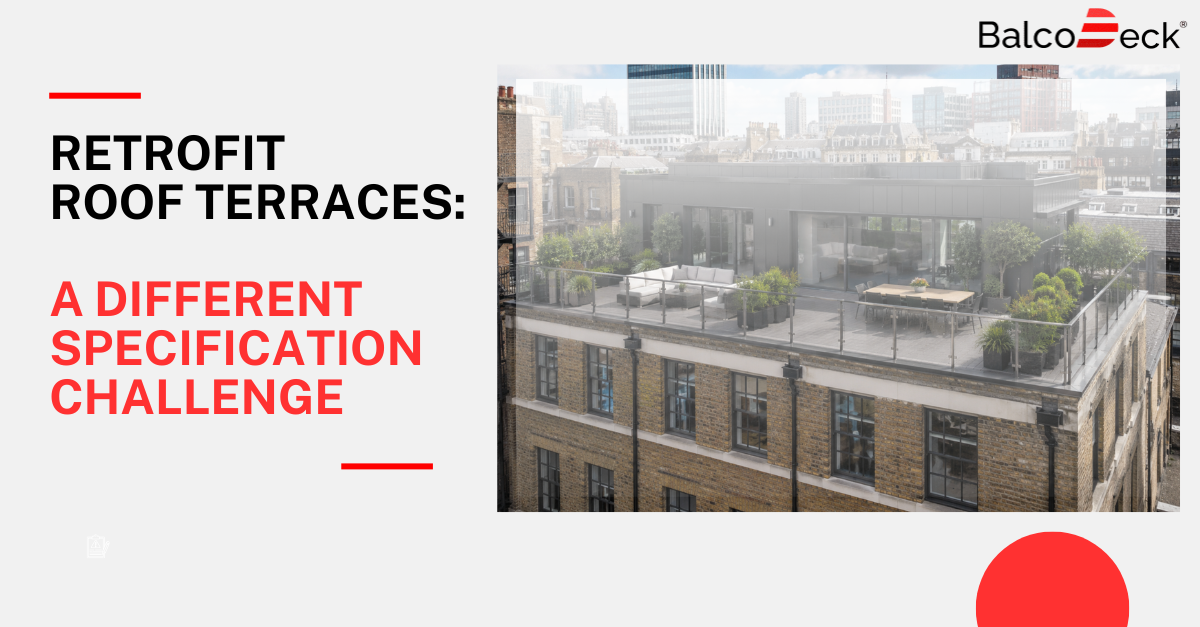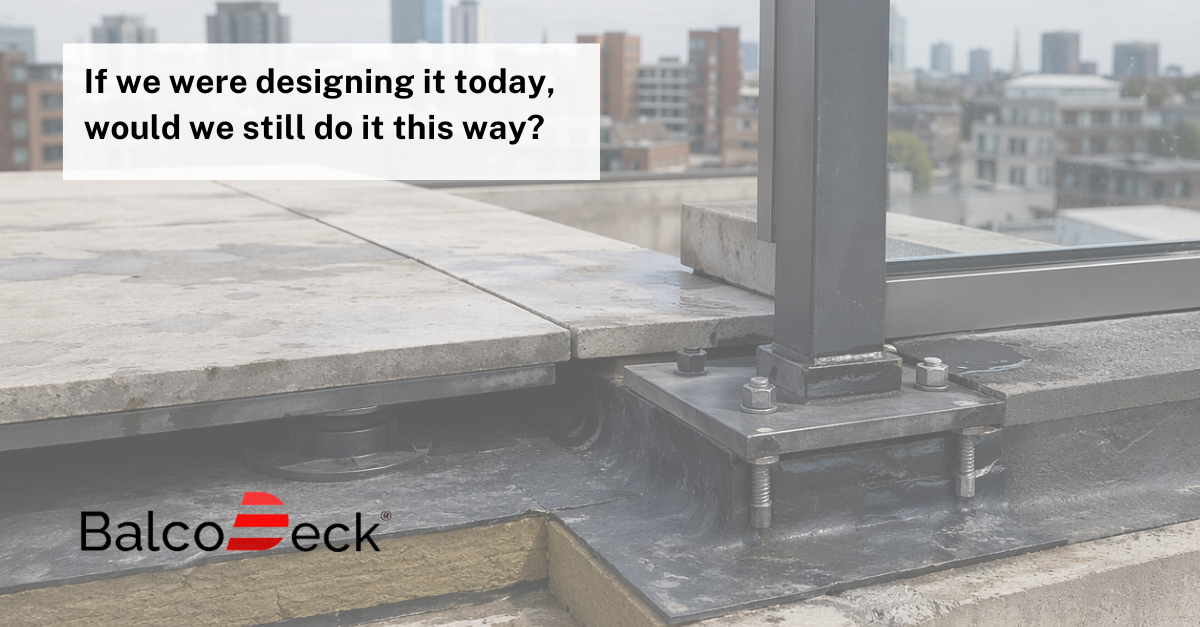
Roof terrace detailing has followed a consistent path for many years. In most projects, achieving structural performance for balustrades or guarding systems has meant anchoring directly into the slab – a method that is widely understood and routinely specified.
However, this approach introduces a secondary consideration that is often less visible at design stage: the impact on the waterproofing layer.
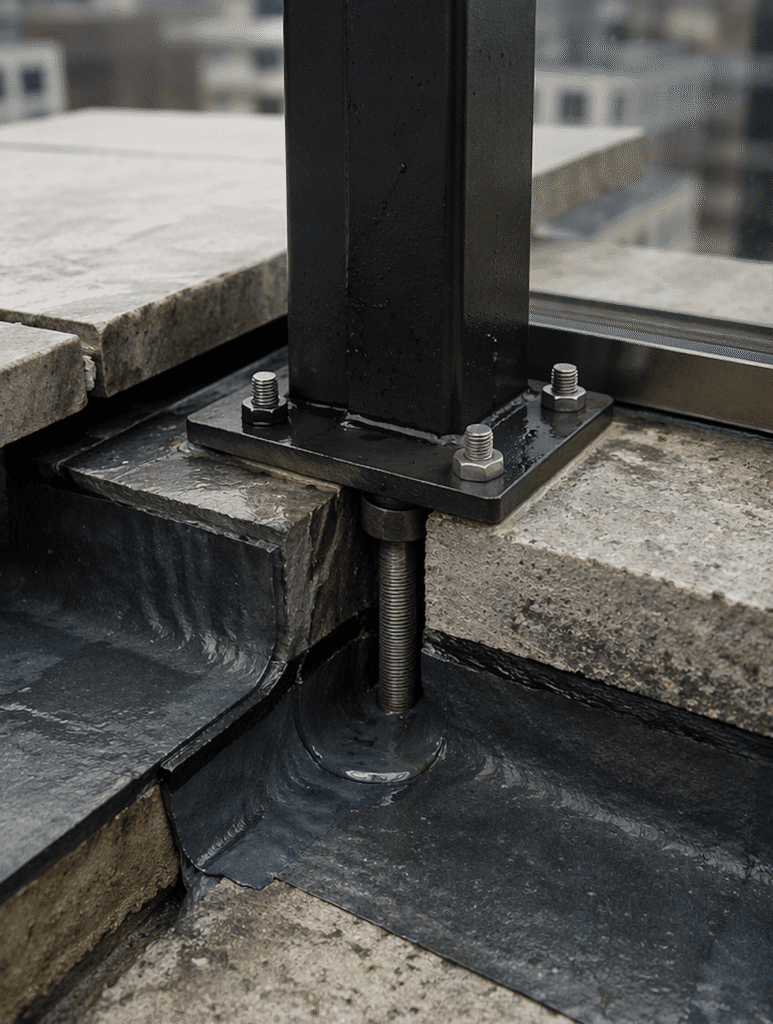
Where structural fixings penetrate the membrane, the integrity of that waterproofing becomes dependent on localised detailing – typically involving sealants, collars or flashing systems. While these can perform effectively when installed correctly, they introduce interfaces that are exposed to movement, weathering and long-term material degradation.
What makes this particularly important in roof terrace design is that the waterproofing layer is concealed beneath finishes. As a result, any deterioration at these points may not be immediately visible, and issues can emerge years after completion.
As expectations around building performance continue to evolve – particularly in relation to lifecycle, maintenance and long-term risk – there is growing interest in whether these traditional detailing approaches should be reconsidered.
Systems such as BalcoDeck® reflect this shift in thinking by enabling structural loads to be managed without penetrating the waterproofing layer. By maintaining membrane continuity, they remove reliance on sealant-dependent interfaces and simplify long-term performance considerations.
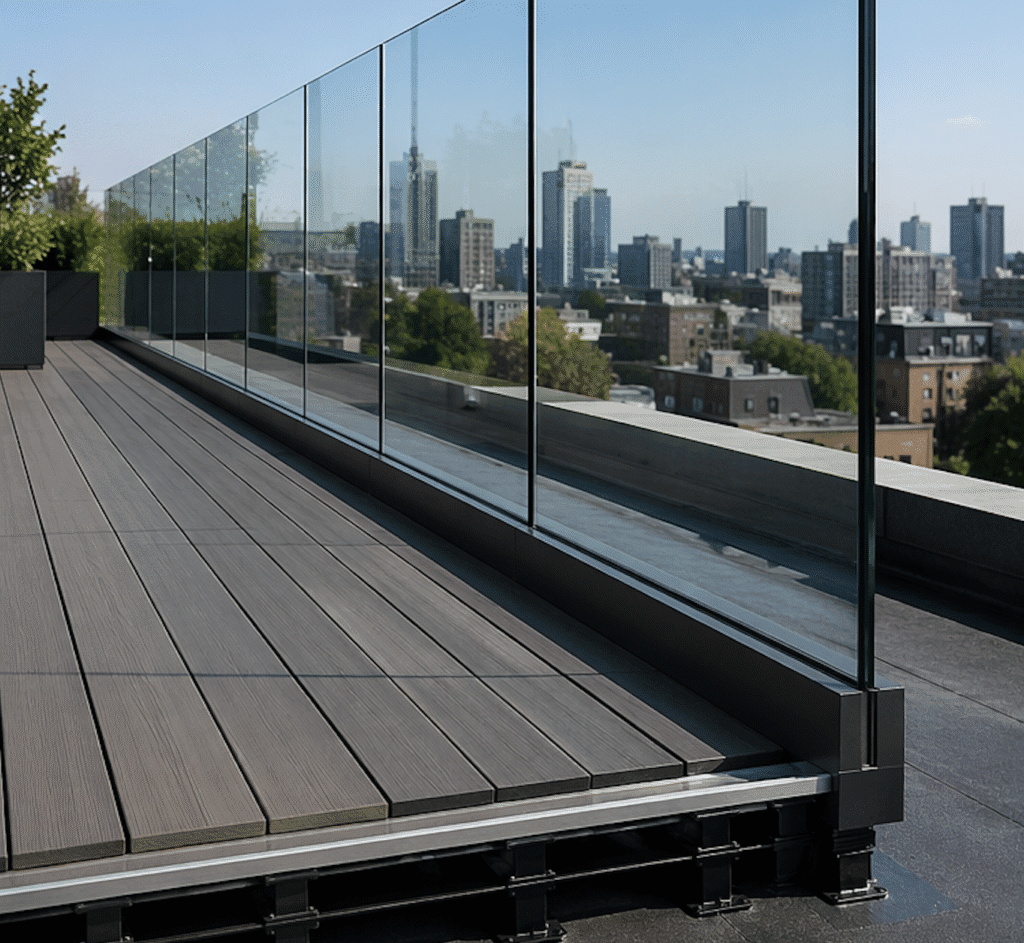
The question for designers is no longer just how a detail performs at handover – but how it performs over time.
Read the full article on Balconette here