A roof terrace specification does more than identify products. It communicates the design intent, defines the required performance and helps ensure every party involved understands what the finished installation must achieve.
Where specifications are unclear, contractors may propose alternative systems during tender. While substitutions are a normal part of construction procurement, they should never compromise the objectives of the original design.
For architects and specifiers, clear specification wording is one of the simplest ways to protect the integrity of a project.
Why Generic Roof Terrace Specifications Create Risk
A specification that simply describes a “glass balustrade” or “raised decking system” leaves significant room for interpretation.
Different roof terrace systems may appear similar once completed, but they can differ considerably in:
- Structural support methods
- Waterproofing interfaces
- Installation techniques
- Drainage considerations
- Long-term maintenance requirements
Without clearly defining the required performance, alternative products may be assessed on appearance or price rather than whether they achieve the original design objectives.

Key Performance Requirements for Roof Terrace Systems
Rather than focusing solely on product names, a specification should explain the outcomes the system must deliver.
These typically include:
- Structural performance
- Protection of the waterproofing system
- Compatibility with the existing roof construction
- Compliance with relevant Building Regulations and standards
- Long-term durability and maintenance considerations
By defining these requirements clearly, any proposed alternative can be assessed against measurable performance criteria rather than visual similarity alone.
Specifying Non-Penetrative Roof Terrace Systems
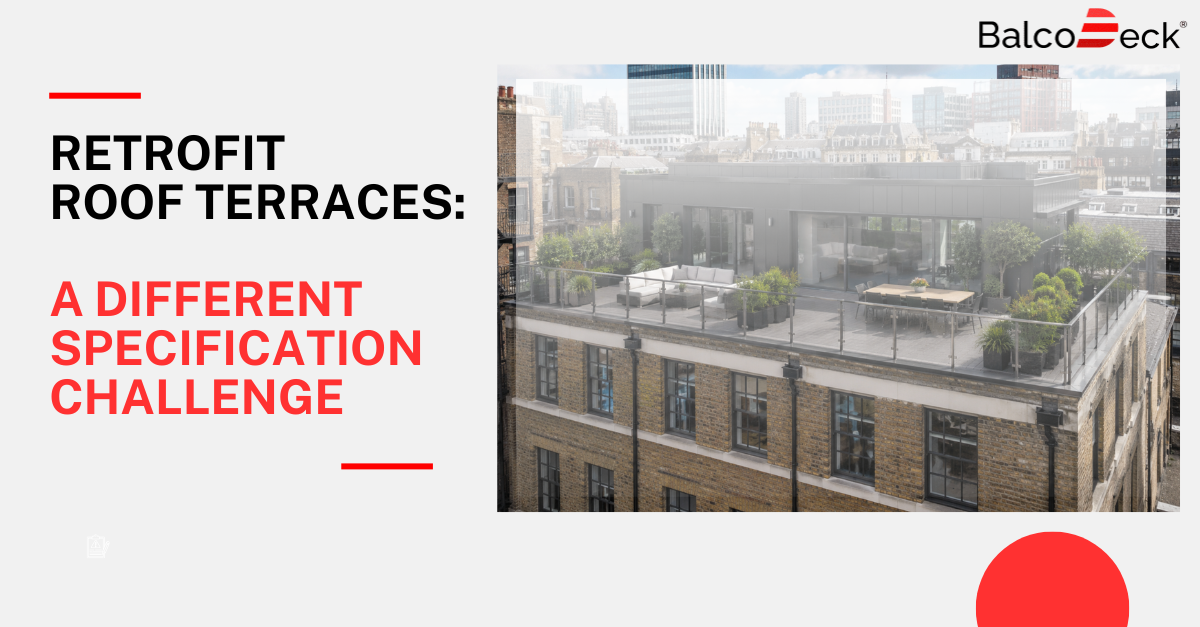
On many flat roof projects, maintaining the integrity of the waterproofing membrane is a key design objective.
Where a non-penetrative* roof terrace system has been selected specifically to avoid mechanically fixing through the waterproofing membrane, that requirement should be clearly identified within the project specification.
Doing so makes the original design intent easier to understand during tender and throughout construction.
How Clear Specifications Help Prevent Product Substitution
Clear specifications reduce uncertainty, improve communication between designers and contractors, and help minimise unnecessary changes once construction begins.
By describing the performance requirements from the outset, project teams can make more informed decisions while protecting the objectives established during the design process.
BalcoDeck is a non-penetrative* roof terrace system developed for flat roof applications where protecting the waterproofing membrane forms an important part of the overall design strategy.
For a more detailed technical discussion on specification wording and preventing substitutions during tender, read our comprehensive guide on the Balconette website here.
*A non-penetrative roof terrace system is installed without mechanically fixing through the roof waterproofing membrane. Structural support is achieved without penetrating the waterproofing layer, helping preserve the integrity of the existing roof system.
.