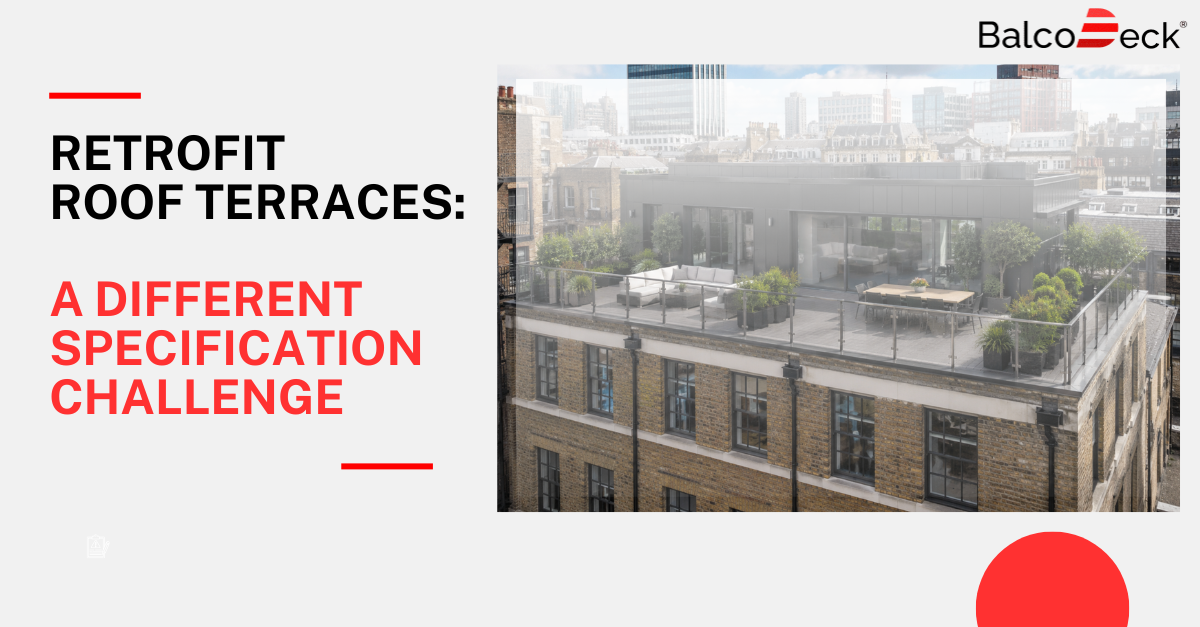
Designing roof terraces on flat roofs is one of the most underused opportunities in residential design. For architects and developers working in dense urban environments, converting roof space into usable terraces can significantly improve the quality and value of a building.
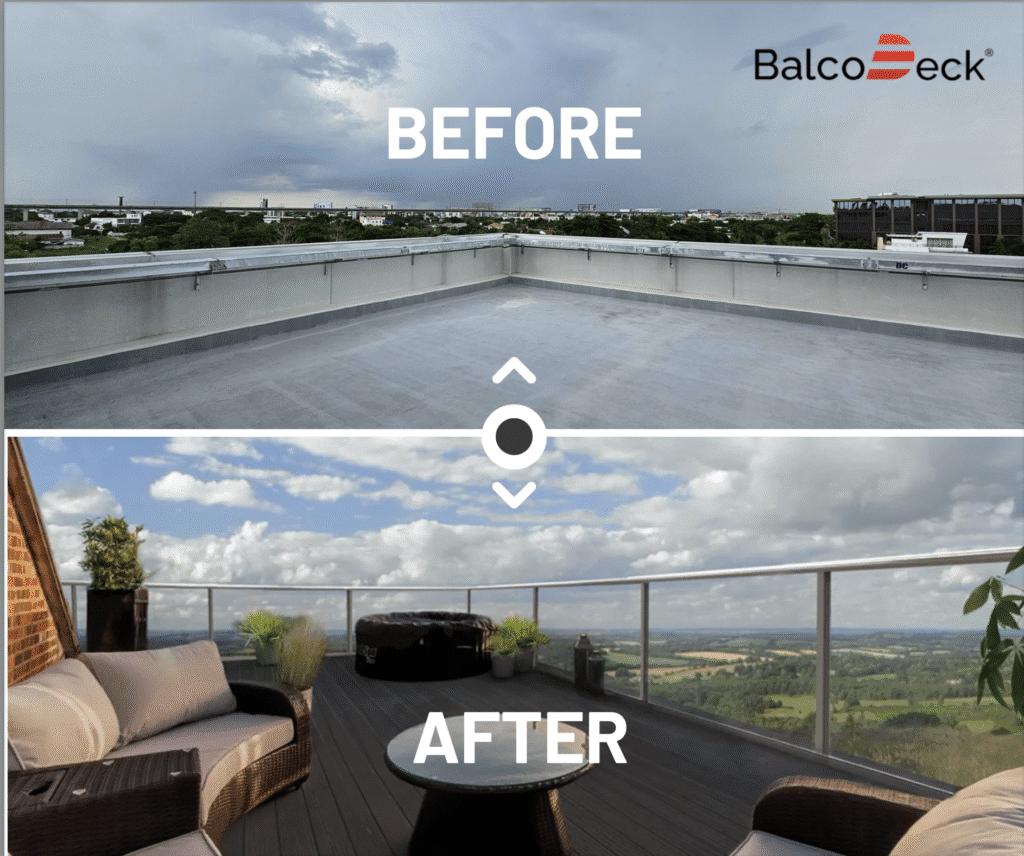
However, designing roof terraces requires careful consideration of several technical factors.
Structural capacity is often the first question. A roof slab must be capable of supporting the additional loads introduced by decking systems, balustrades, furniture and occupants. Structural engineers typically need to assess whether the existing structure can accommodate these loads safely.
Waterproofing integrity is another critical consideration. Where terraces are located above habitable space, the roof also forms part of the building envelope. Fixings introduced through the waterproof membrane – such as balustrade posts – can introduce potential maintenance risks if not carefully detailed.
Drainage, guarding requirements and long-term maintenance access also need to be considered early in the design process.
At Balconette, we developed the BalcoDeck system to help simplify some of these challenges by allowing terrace structures to sit above the waterproof membrane without penetrations.
Read the full article on Balconette:
balconette.co.uk/decking/articles/designing-roof-terraces-flat-roofs-opportunities-constraints