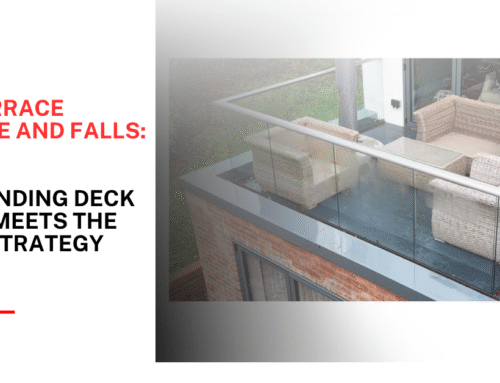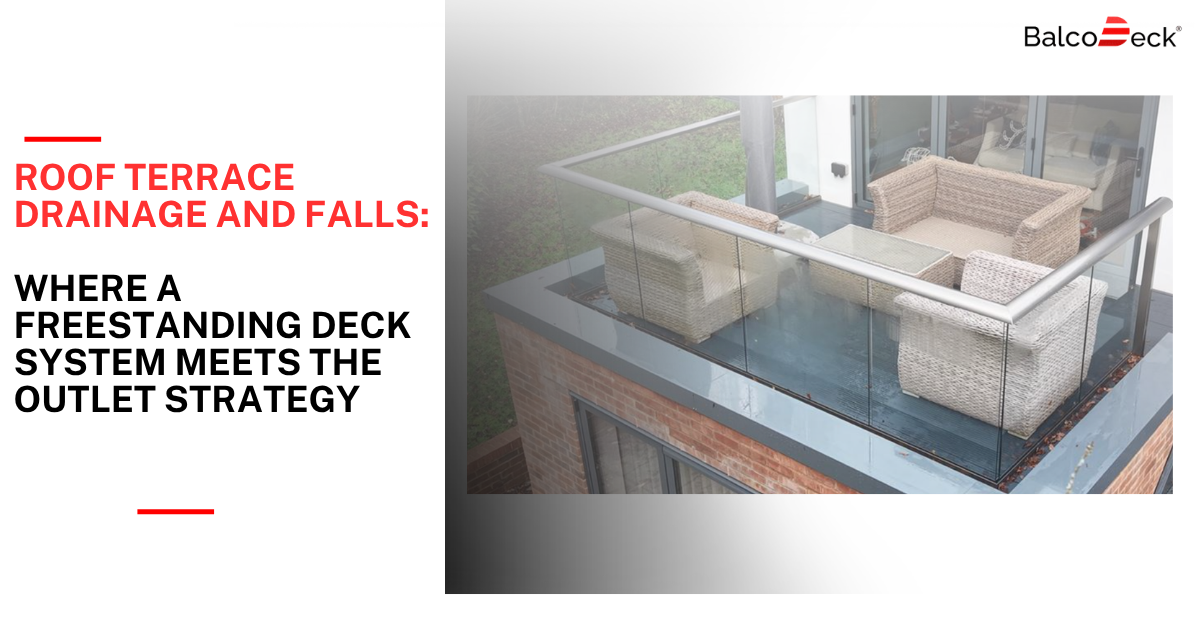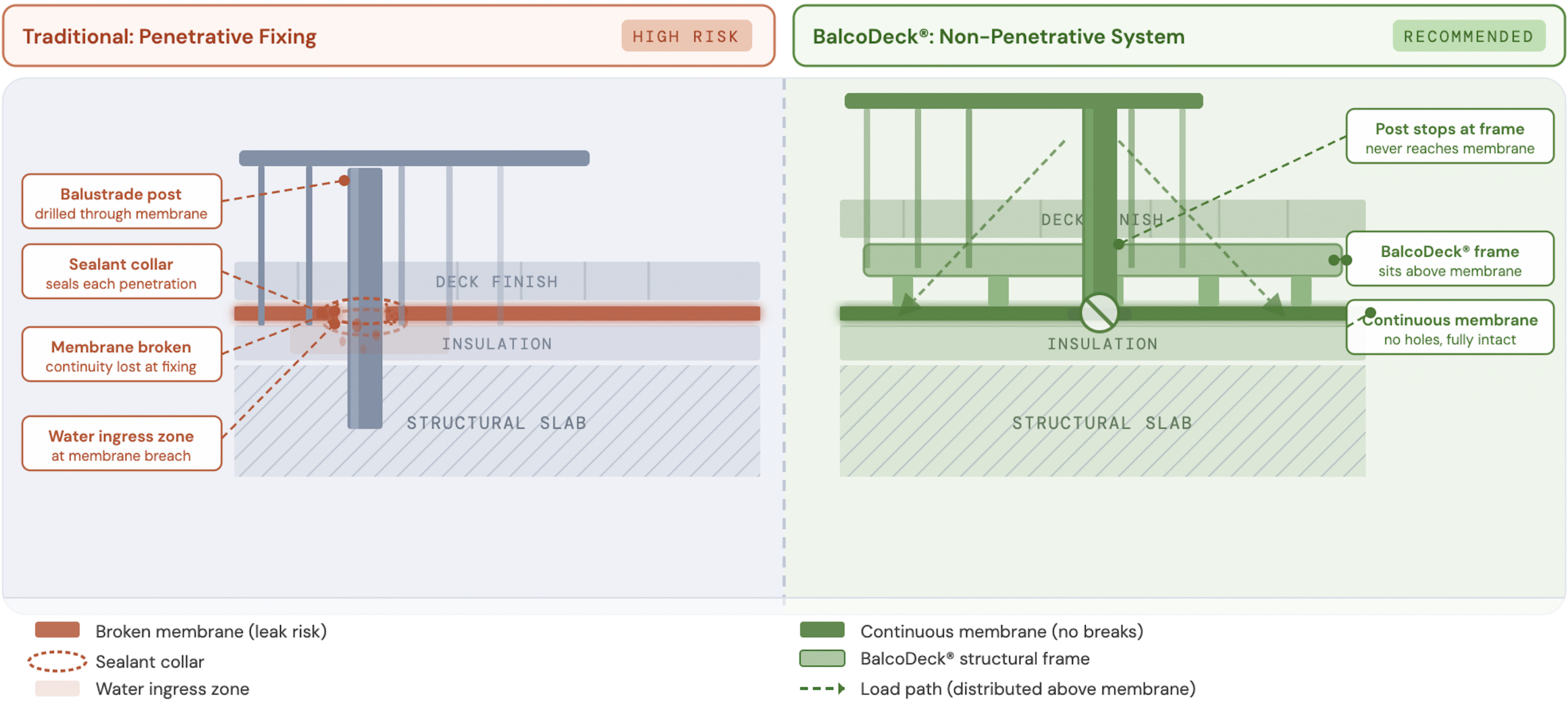
Balcony and roof terrace detailing has traditionally relied on a simple assumption: that structural elements such as balustrades must be fixed directly into the building structure, even when that means penetrating the waterproof membrane. This article explains the difference between penetrative vs non-penetrative balcony detailing.
In practice, this creates a tension between two critical requirements. On one hand, balustrades must resist structural loads from occupants and wind. On the other, waterproofing systems rely on continuity to perform reliably over time.
Introducing penetrations through the membrane interrupts that continuity. While sealants, collars and flashings are used to maintain watertightness, these elements often operate on a shorter lifecycle than the membrane itself and are exposed to movement, weathering and structural forces.
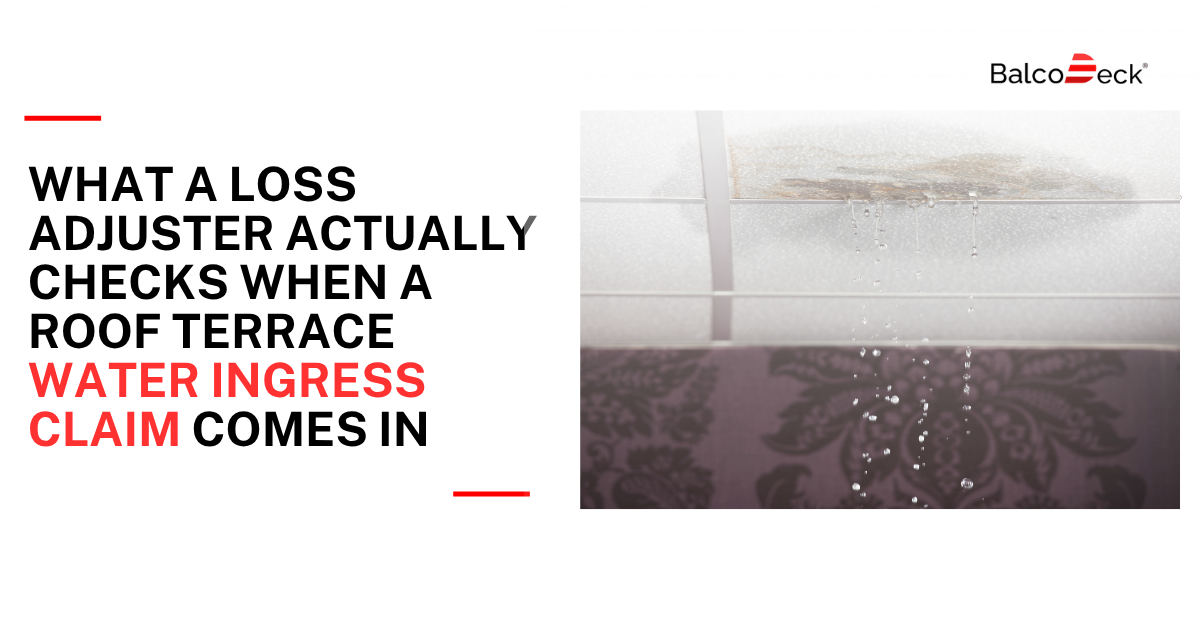
For roof terraces constructed above habitable space, this detail becomes particularly significant. Failures are often hidden beneath finishes, making inspection difficult and remediation disruptive if issues arise.
As a result, many designers are now reconsidering whether penetrative detailing is the most robust long-term approach.
Non-penetrative systems offer an alternative by separating structural load transfer from the waterproofing layer. Rather than anchoring balustrades through the membrane, loads are distributed across an engineered structure positioned above it, allowing the membrane to remain continuous.
At Balconette, the BalcoDeck system was developed to support this approach, enabling terraces to meet structural and safety requirements without introducing penetrations through the waterproofing layer.
What Are the Key Differences Between Penetrative and Non-Penetrative Balcony Detailing?
The main difference between penetrative and non-penetrative balcony detailing is how the balustrade system is connected to the supporting structure and how it interacts with the waterproofing layer. Each approach has different implications for installation, waterproofing, maintenance and long-term performance.
Key differences include:
- Waterproofing
- Penetrative: Requires fixing through the waterproof membrane.
- Non-penetrative: Maintains a continuous waterproofing layer without direct penetrations.
- Structural connection
- Penetrative: Uses direct mechanical fixings into the supporting structure.
- Non-penetrative: Uses an engineered system to distribute loads.
- Installation
- Penetrative: Requires careful coordination with waterproofing details.
- Non-penetrative: Offers flexibility where membrane protection is important.
- Maintenance
- Penetrative: Fixing points may require ongoing inspection.
- Non-penetrative: Reduces interfaces with the waterproof membrane.
- Project suitability
- Penetrative: Suitable where structural fixing through the membrane is acceptable.
- Non-penetrative: Often considered for roof terraces and retrofit projects.
Read the full article on Balconette here to explore the lifecycle implications of penetrative vs non-penetrative detailing:
Fact-checked by Effi Wolff, Founder of Balconette/BalcoDeck