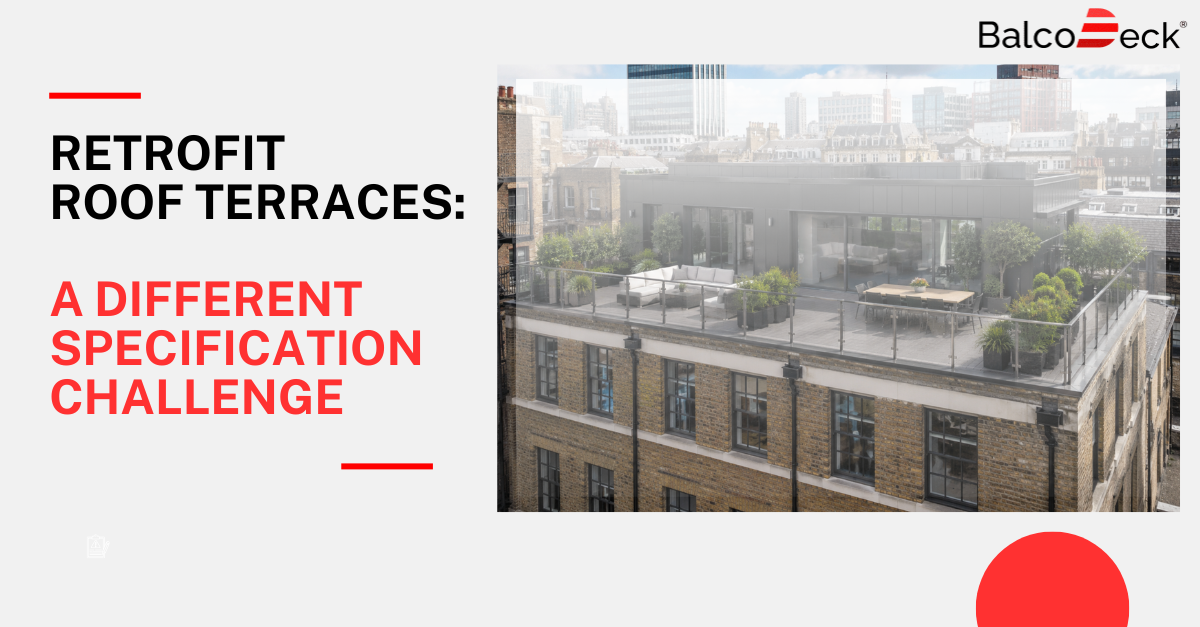
As building fabric performance standards continue to evolve, architects are paying closer attention to thermal bridges, thermal performance and heat loss pathways throughout the building envelope.
Traditionally, most attention has focused on areas such as window reveals, balcony slab edges and structural penetrations. These are well understood and routinely considered during thermal modelling exercises.
However, roof terraces can introduce additional thermal bridges that are often overlooked.
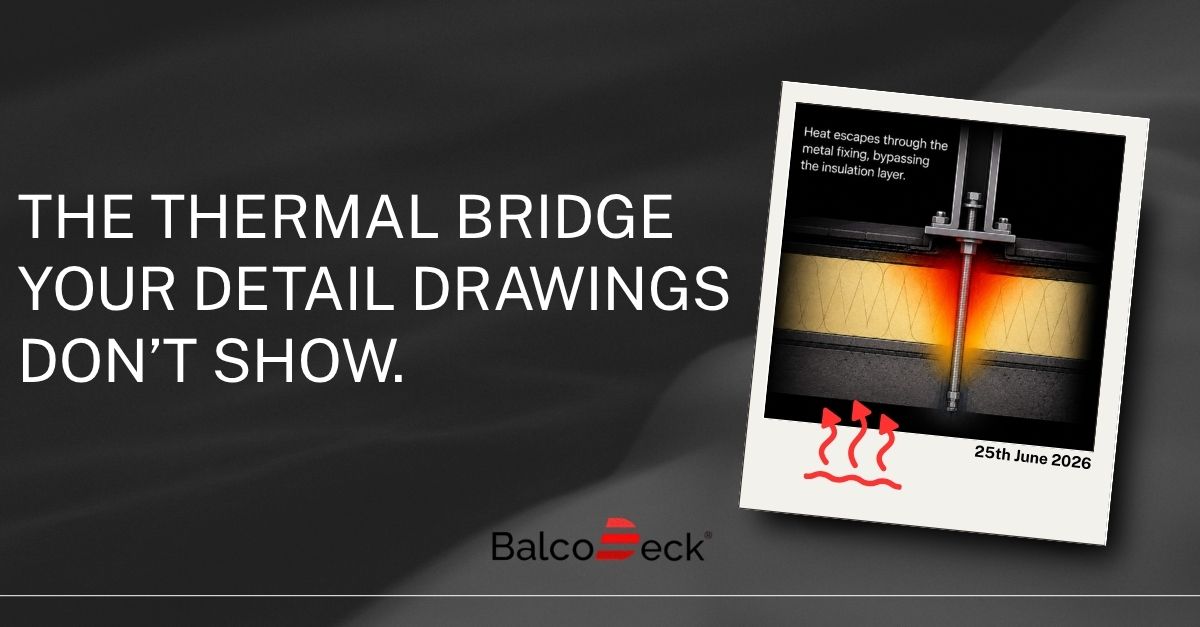
Where balustrade systems are fixed through an insulated roof build-up, metal components may create a direct path through the insulation layer. While each fixing may appear relatively small, the cumulative effect can influence thermal performance calculations and create localised cold spots within the construction.
This does not necessarily mean a project will fail compliance requirements. It does mean that additional thermal considerations may be introduced that would not otherwise exist.
Non-penetrative design approaches offer a different solution.
Rather than trying to account for thermal bridges after they have been created, they seek to avoid creating them in the first place. By keeping the insulation and waterproofing layers intact, the continuity of the thermal envelope is maintained.
For designers pursuing high-performing building envelopes, simplicity often delivers the best outcomes. Fewer penetrations, fewer interfaces and fewer thermal interruptions generally result in a more predictable and efficient construction.
As performance requirements continue to tighten, the value of preserving the integrity of the roof build-up is only likely to increase. Find out more on our Balconette site here.